Elderly Helper
A Little Help From You. A Lot of Hope for Them.
What Can we do !
Note: The information on this website is based on limited research conducted for a student project and is for informational purposes only. It should not be considered professional medical advice.
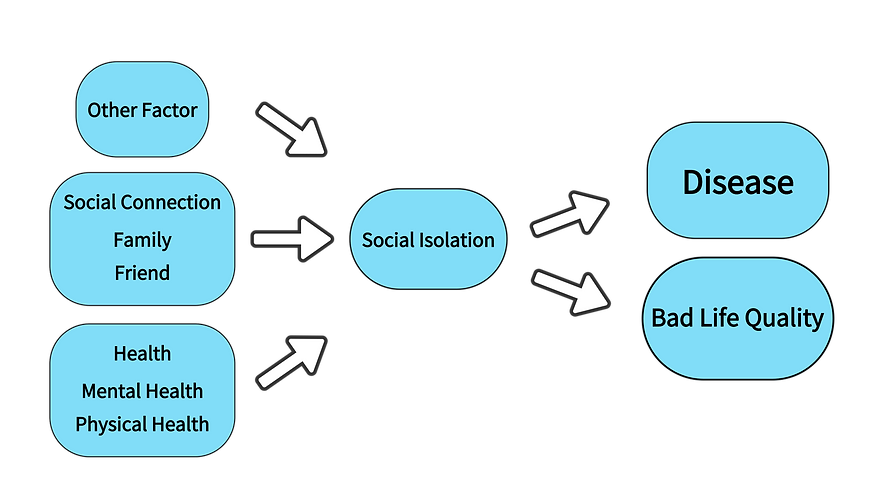
Pathway from Social Isolation to Serious Health Consequences
For each aspect, we can intervene to prevent social isolation from occurring

Older adults may struggle to adapt due to a lack of companionship from family and friends, or even the passing of a partner or close friend. For various reasons, the people they can truly open up to are gradually leaving their lives. This change can make it difficult for them to adjust, leading them to withdraw from social interactions and become isolated.
For example: An elderly person who has lost a spouse may be reluctant to engage in conversation with members of the opposite sex, as they might perceive this as a betrayal of their late partner.
Therefore, when their social opportunities diminish, proactive intervention is crucial. The most direct approach is to create social opportunities for them. Children can choose to engage in more conversations with their elderly parents or help them find similar groups, such as senior social clubs. Ultimately, helping them overcome their reluctance to socialize and maintain a positive mindset is key to preventing social isolation.
Health issues also rank among the primary causes of social isolation. Some seniors may develop subtle mental health conditions due to life changes, such as the loss of loved ones mentioned in the social connection section. These conditions often go unnoticed because of communication barriers, reluctance to express feelings, or societal biases. Professional psychological counseling is recommended for addressing such situations.
Physical illness is another significant factor. Research indicates that approximately 80% of adults aged 65 and older have at least one chronic condition (National Academies of Sciences, 2020). Certain chronic illnesses can limit physical function, reducing their ability to participate in social activities, thereby intensifying feelings of loneliness and exacerbating social isolation. Even when a condition doesn't directly impair mobility, the stigma associated with it or the blow to self-esteem can still hinder social engagement. For example, older adults with chronic pain may require assistance or rely on mobility aids during flare-ups. If this occurs in social settings, they might feel embarrassed or ashamed to ask for help, leading them to avoid outings altogether. To prevent or mitigate social isolation among older adults, timely intervention is essential. We must proactively alleviate their feelings of embarrassment and actively assist those with mobility challenges.


If an elderly person finds themselves trapped in social isolation, my first priority is to prevent the situation from worsening. Research indicates that loneliness and social isolation are closely linked to mental health conditions such as depression (National Academies of Sciences, 2020). Should prolonged social isolation trigger more severe psychological disorders, the situation becomes significantly harder to manage.
Next, I would delve deeper into the elderly person's circumstances to identify the root causes of their social isolation and address them directly. Concurrently, I would recommend comprehensive physical examinations for those enduring prolonged social isolation. Research indicates that long-term social isolation significantly elevates the risk of illness in the elderly(National Academies of Sciences, 2020).
Each individual is unique, so social isolation can also arise from various other factors. For instance, some seniors may have inherently introverted personalities. In summary, based on the definition of social isolation, if such a situation occurs, improving seniors' social interactions and lifestyle can help resolve most of their issues.
